Hip arthritis can progress slowly enough that patients gradually adjust their lifestyle around the problem. They walk shorter distances, avoid stairs, stop exercising, or ask family members to handle activities that have become uncomfortable. Eventually, Hip Replacement Surgery may be discussed when joint damage significantly restricts everyday life.
For patients in Bhandup, Maharashtra, recognising readiness indicators can help determine when a specialist review is appropriate.
Persistent Pain Is One Indicator
Advanced hip arthritis commonly causes pain around the groin, although discomfort may also be felt around the thigh, buttock, or knee.
Pain that appears only after unusual activity may not indicate advanced disease. More concerning patterns include persistent discomfort during routine walking, pain at rest, or symptoms that repeatedly disturb sleep.
Increasing dependence on pain medication also deserves medical review.
Daily Activities Become Difficult
Hip stiffness can make surprisingly basic activities challenging.
Patients may struggle to:
- Put on socks
- Tie shoelaces
- Get into a car
- Rise from low seating
- Walk to nearby destinations
- Climb stairs
- Stand for prolonged periods
- Perform household activities
When these limitations continue to increase, the effect on independence becomes an important part of the treatment decision.
Conservative Treatment Has Become Insufficient
Hip replacement is generally not the first treatment for every patient with arthritis.
Depending on the condition and severity, non-surgical care may include activity modification, physiotherapy, medication, weight management where appropriate, walking aids, or other measures.
Surgery may be discussed when appropriate conservative options have been tried but significant symptoms persist.
Imaging Shows Advanced Joint Damage
X-rays are commonly used to evaluate hip arthritis. They may show narrowing of the joint space, changes in bone shape, bone spurs, or other features associated with degeneration.
Imaging alone does not decide treatment. Some people have substantial X-ray changes but manageable symptoms, while others experience major functional limitations.
The clinical picture and imaging should therefore be considered together.
What Happens During Hip Replacement?
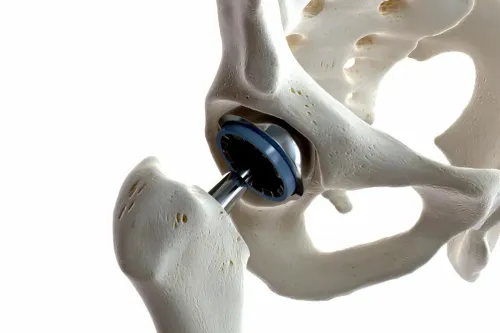
During Hip Replacement Surgery, damaged joint surfaces are replaced with artificial components designed to create a new articulation.
Preoperative planning considers anatomy, implant selection, positioning, medical fitness, and other individual factors. In selected settings, robotic technology may assist with planning and component positioning.
The surgeon remains responsible for all clinical decisions throughout the procedure.
Readiness Includes Medical Preparation
Being ready for surgery is not only about pain severity.
Medical conditions should be appropriately assessed and optimised. Patients should discuss medications, diabetes control, cardiac history, previous infections, allergies, and other relevant issues.
Smoking status, nutritional health, skin problems around the operative area, and dental or other active infections may also be relevant depending on the clinical situation.
A Consultation Should Clarify Expectations
Dr. Prajyot Jagtap evaluates hip arthritis by considering symptoms, mobility, imaging, previous treatment, and general health. Patients in Bhandup experiencing progressive loss of mobility can seek assessment to understand whether replacement has become appropriate.
The decision for Hip Replacement Surgery is highly individual. There is no single pain score or age at which every patient should undergo the procedure.
When pain, stiffness, functional restriction, imaging findings, and unsuccessful conservative care point in the same direction, specialist evaluation can help establish whether replacement is a reasonable next step and what preparation will be required.
Keywords