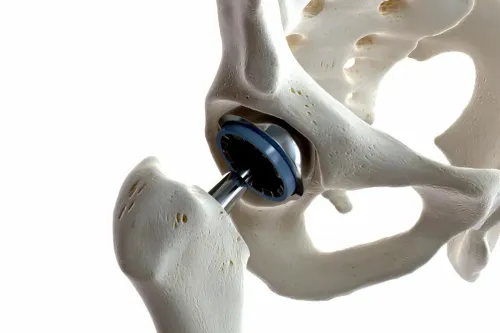
Knee arthritis does not always damage every part of the joint equally. In some patients, degeneration remains concentrated within a particular compartment while other areas retain useful cartilage, ligaments, and function. Microplasty is associated with a more targeted approach to knee replacement in appropriately selected cases.
For patients in Deonar, Maharashtra, learning how partial knee replacement works can make discussions about treatment for compartment-specific osteoarthritis easier to understand.
Why Knee Arthritis Can Be Localised
The knee is commonly described as having three compartments: the medial compartment on the inner side, the lateral compartment on the outer side, and the patellofemoral compartment involving the kneecap.
Some patients develop advanced degeneration predominantly within one compartment. This is different from widespread arthritis affecting most of the knee.
When damage is truly localised, replacing the entire knee may not always be necessary. Patient selection, however, is crucial.
What Does Microplasty Aim to Do?
Microplasty techniques are associated with precise partial knee replacement planning and implantation. The intention is to replace the damaged joint surfaces while retaining healthy structures wherever appropriate.
This differs from total knee replacement, where the resurfacing involves a broader portion of the knee.
Potential advantages of a partial approach in properly selected patients can include preservation of more natural bone and soft tissue. Some patients may also experience a knee that feels relatively natural because important structures remain intact.
These potential benefits should not be interpreted as guarantees. Outcomes depend on diagnosis, surgical execution, rehabilitation, and individual health factors.
Who May Be Considered?
A patient may be evaluated for partial knee replacement when arthritis is predominantly confined to one compartment and symptoms correspond with that area.
Assessment generally considers:
- Distribution of cartilage loss
- Ligament stability
- Knee alignment
- Range of motion
- Severity of pain
- Functional limitation
- Condition of the remaining compartments
- General medical fitness
Detailed examination and appropriate weight-bearing X-rays are particularly important.
Why Accurate Selection Matters
A partial procedure is not automatically preferable simply because it involves less of the knee.
If arthritis is widespread, important ligaments are unsuitable, or other structural problems are present, a total knee replacement may provide a more appropriate solution.
This makes imaging and clinical examination essential. The goal is to select the operation that matches the actual pattern of disease.
What About Recovery?
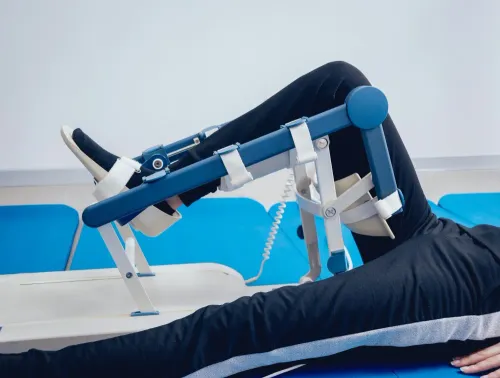
Recovery varies between individuals. Patients usually begin a structured programme focused on walking, knee movement, swelling control, and muscle activation.
As recovery progresses, strengthening and functional exercises become increasingly important.
The speed of improvement should not be compared rigidly between patients. Preoperative strength, age, general health, pain tolerance, surgical findings, and adherence to rehabilitation can all affect progress.
Is Microplasty Suitable for Every Age Group?
Age is only one consideration. The condition of the knee is more important than choosing a procedure based purely on a patient's age.
A relatively young patient may have disease unsuitable for partial replacement, while an older patient may have well-localised arthritis that warrants evaluation for a bone-preserving approach.
Dr. Prajyot Jagtap evaluates knee arthritis by considering the pattern of degeneration rather than applying the same replacement procedure to every patient. People in Deonar with predominantly one-sided knee pain can undergo assessment to determine whether the arthritis is limited enough for a partial approach.
Microplasty represents the principle that knee replacement can sometimes be tailored to the part of the joint that is actually damaged. The key is careful assessment: preserving healthy structures is valuable only when doing so provides a stable and appropriate solution for the individual knee.
Keywords