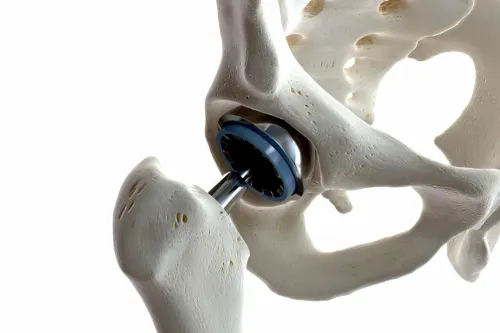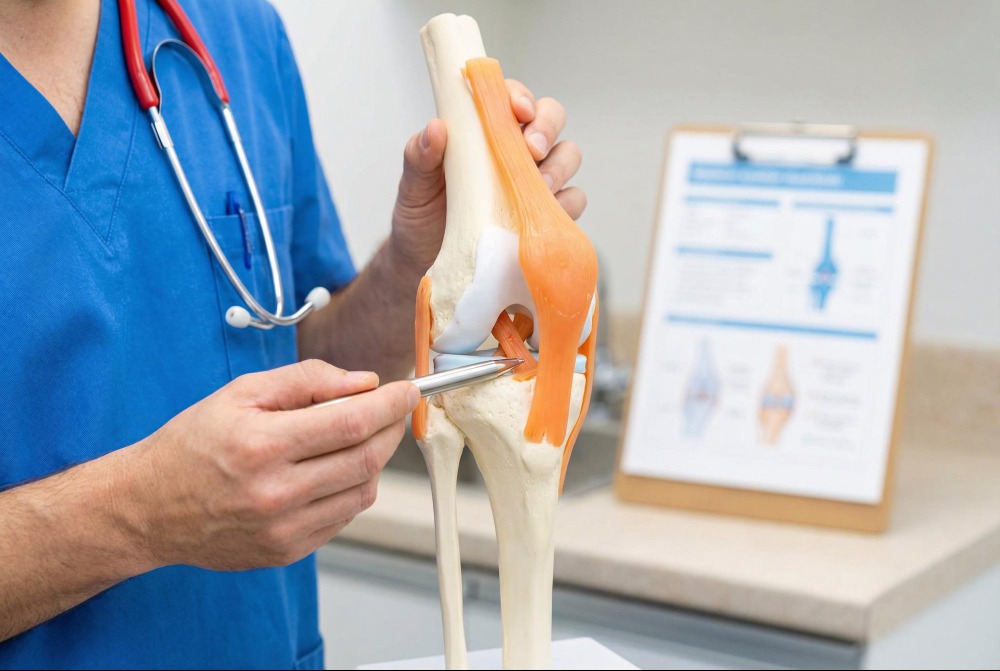
Some people with knee osteoarthritis have severe cartilage damage concentrated on one side of the joint while other compartments remain comparatively healthy. Unicorndylar Knee Replacement, more commonly referred to clinically as unicondylar or unicompartmental knee replacement, is designed for selected patients with this pattern of disease.
For patients in VidyaVihar, Maharashtra, determining suitability requires a detailed assessment rather than simply choosing a smaller operation because it sounds less invasive.
What Makes This Procedure Different?
A total knee replacement addresses a broader area of the knee. A unicompartmental procedure focuses on the compartment where advanced arthritis is present.
The damaged surfaces are resurfaced with appropriately selected components while healthy structures are preserved where possible.
This targeted approach can retain more natural bone and important soft tissues.
The Most Important Requirement Is Correct Patient Selection
Partial replacement works best when the disease pattern genuinely matches the procedure.
Before recommending surgery, the orthopaedic surgeon assesses the location of arthritis, knee alignment, ligament function, range of movement, and the condition of the remaining compartments.
Weight-bearing X-rays are particularly useful because they demonstrate how the joint behaves under load.
Patients should ask to see where their arthritis is located rather than relying solely on the phrase “knee arthritis.”
Symptoms Should Match the Damaged Area
Imaging findings need to correlate with the patient's actual symptoms.
For example, a patient with predominantly medial compartment degeneration may experience pain concentrated along the inner aspect of the knee, particularly during weight-bearing activities.
If symptoms arise from several structures or widespread degeneration, treating only one compartment may not solve the underlying problem.
What Are the Potential Advantages?
For appropriately selected patients, preserving unaffected portions of the knee can provide several potential advantages.
There may be less bone removal compared with total replacement, and important native structures can remain intact. Some patients experience relatively natural-feeling knee movement after rehabilitation.
The operation should nevertheless be treated as a significant joint replacement procedure. Potential complications still exist, and long-term success depends on appropriate indication, technique, implant factors, patient health, and postoperative care.
When Is a Total Replacement More Suitable?
A partial procedure may not be appropriate when degeneration is widespread across multiple compartments or when other structural factors make a targeted replacement unsuitable.
In those situations, total knee replacement may provide a more comprehensive treatment.
Choosing a partial operation simply to avoid total replacement can be counterproductive if the remaining knee already has significant disease.
Questions to Ask Before Proceeding
Before considering Unicorndylar Knee Replacement, patients can ask:
- Which compartment is damaged?
- Are the remaining compartments sufficiently preserved?
- Are my ligaments suitable?
- What does my knee alignment show?
- Why is partial replacement preferable in my case?
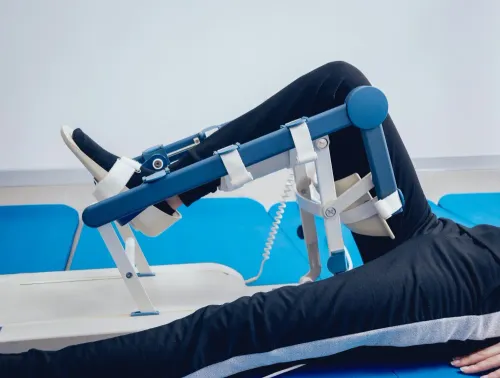
- What rehabilitation will be required?
- What factors could make total replacement more appropriate?
Dr. Prajyot Jagtap evaluates these clinical factors when planning surgery for compartment-specific knee arthritis. Patients in VidyaVihar can benefit from understanding the exact pattern of their joint degeneration before selecting a replacement approach.
A targeted knee replacement can be valuable when disease is genuinely localised. The objective is not to perform less surgery at any cost; it is to perform the amount of reconstruction that appropriately addresses the damaged part of the knee while preserving useful structures whenever clinically suitable.
Keywords