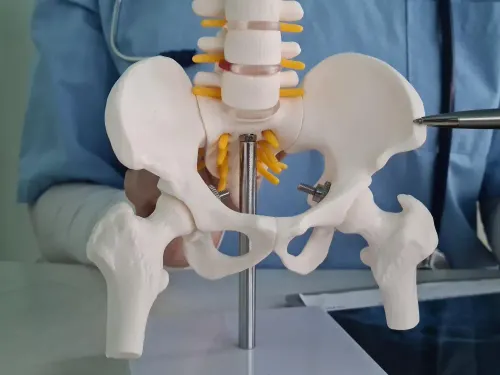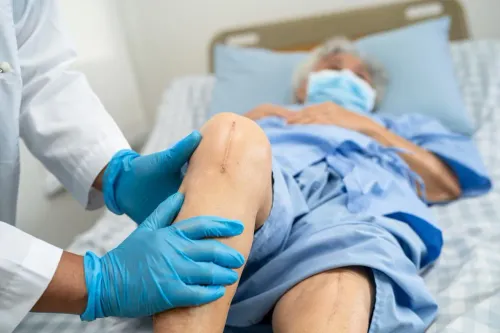
A diagnosis of knee osteoarthritis does not automatically determine the type of surgery a patient may eventually need. Some knees develop extensive degeneration, while others have severe damage concentrated within a single compartment. Partial Knee Replacement can be considered when the second pattern is present and other suitability criteria are met.
For patients in Chandivali, Maharashtra, understanding the candidate-selection process can make a surgical consultation much more productive.
Your Arthritis Must Be Appropriately Localised
This is one of the most important considerations.
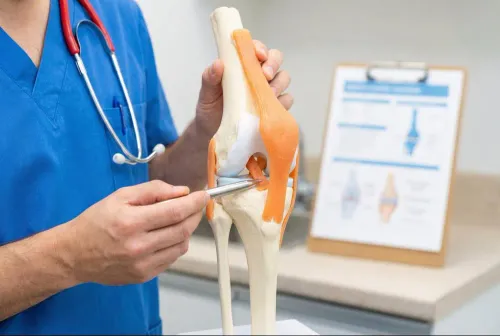
The knee has distinct compartments. Partial replacement is designed to resurface the affected compartment while preserving healthier portions of the joint.
If significant arthritis has spread across multiple compartments, a partial procedure may not adequately address the source of symptoms.
Weight-bearing X-rays can help establish the pattern and severity of degeneration.
Your Symptoms Need to Match the Findings
A surgeon should not recommend replacement based only on an X-ray.
Pain location, walking limitations, stiffness, examination findings, alignment, and the patient's functional difficulties should correspond with the damaged area.
This correlation helps determine whether the identified arthritis is genuinely responsible for the patient's symptoms.
Knee Stability Matters
Ligaments contribute significantly to normal knee stability and movement.
Because Partial Knee Replacement preserves more native structures than total replacement, the condition of important supporting tissues is considered during patient selection.
The surgeon examines knee stability as part of deciding whether a partial procedure can provide an appropriate result.
Age Alone Does Not Decide Eligibility
Patients sometimes assume that partial replacement is intended only for younger people. Others believe that older patients automatically need total replacement.
Neither assumption is reliable.
Age is considered alongside disease distribution, bone quality, health status, mobility expectations, ligament function, alignment, and other clinical findings.
The structure and condition of the knee are more useful than age alone when choosing the type of replacement.
Conservative Care Should Be Considered First
Replacement surgery is generally reserved for symptoms significant enough to justify operative treatment.
Depending on the stage of arthritis, earlier management may involve exercise-based rehabilitation, activity modification, medication, weight management where relevant, walking aids, or selected additional treatments.
When appropriate non-surgical care no longer provides sufficient improvement and daily function remains substantially affected, replacement can become a more reasonable consideration.
Understand What Partial Replacement Can Preserve
One reason partial replacement is attractive in suitable cases is preservation.
Only the diseased compartment is resurfaced, allowing more native bone and soft tissue to remain. This can contribute to a knee that retains more of its original structure.
However, preservation is useful only when the retained portions are healthy enough to remain functional.
Prepare Questions for Your Assessment
A useful consultation should answer several practical questions:
- Is my arthritis limited to one compartment?
- What do my weight-bearing X-rays show?
- Is my knee stable enough for partial replacement?
- Is total replacement likely to provide a better solution?
- Can robotic assistance be used in my case?
- What rehabilitation will I need?
- What are the relevant risks?
- What level of function can reasonably be expected?
Dr. Prajyot Jagtap assesses knee replacement candidates by considering symptoms, examination findings, arthritis distribution, alignment, stability, and individual mobility requirements. Patients in Chandivali who have been advised to consider surgery can undergo evaluation to determine whether preserving unaffected portions of the knee is clinically appropriate.
Being a candidate for Partial Knee Replacement is therefore not simply a matter of wanting a smaller procedure. It depends on having the right pattern of arthritis and a knee that can benefit from targeted resurfacing.
When those conditions are present, partial replacement can offer a focused solution. When they are not, another treatment may provide a more suitable pathway toward dependable mobility and long-term joint function.
Keywords