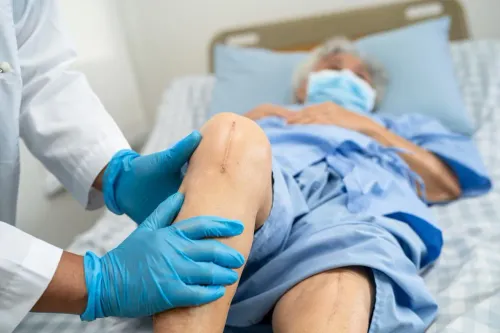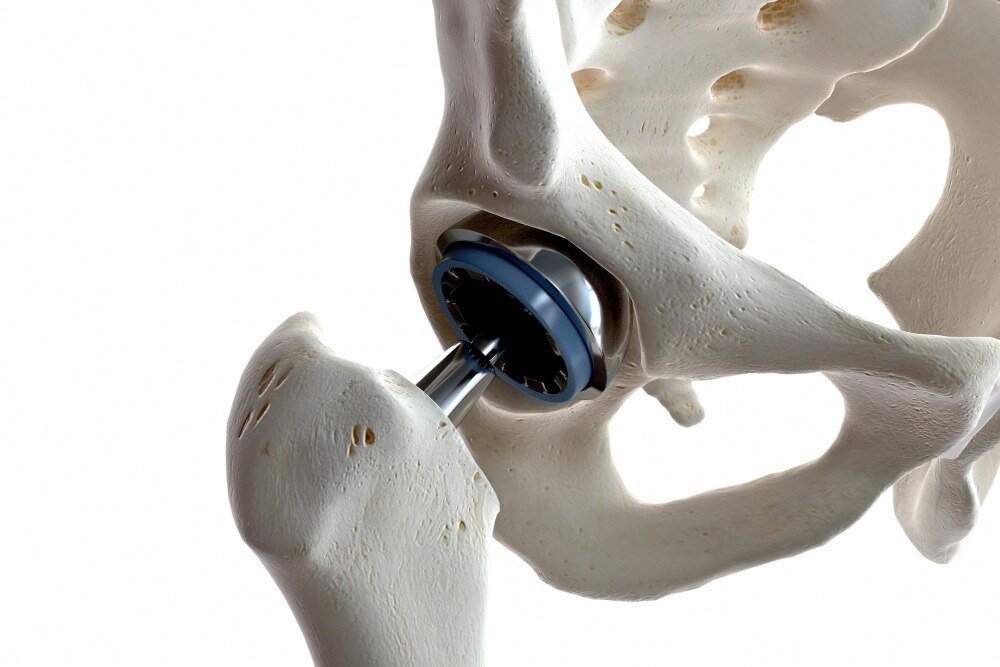
Robotic assistance is considered only after a hip has reached the point where replacement is medically justified. By reviewing symptoms, failed non-surgical care, anatomy, general health, and the limits of robotic technology, you can understand whether it is a sensible option to discuss with an orthopaedic surgeon.
Key takeaways
- Persistent pain and disability matter more than an abnormal X-ray alone.
- Replacement is considered after appropriate non-surgical treatment fails.
- Your health, mobility goals and ability to recover affect suitability.
- Ask what robotic assistance will improve in your specific operation.
Does your hip problem justify replacement surgery?
A total hip replacement indication is persistent hip pain and function-limiting hip disability from advanced joint damage, despite appropriate non-surgical treatment. An abnormal X-ray alone is not enough: some people have cartilage loss or bone spurs without disabling symptoms.
Look for a pattern of symptoms and examination findings:
- Persistent pain in the groin, thigh, or buttock, including pain at night, with stiffness, reduced hip movement, or tenderness.
- A limp, reduced walking distance, difficulty climbing stairs, putting on shoes or socks, working, or rising from a chair.
- Loss of independence, such as needing help with shopping, bathing, dressing, or household tasks.
- Examination findings that match the painful hip, including restricted rotation, weakness, a painful gait, or a measurable leg-length difference.
Possible causes include osteoarthritis of the hip and avascular necrosis (AVN), inflammatory arthritis, developmental dysplasia, post-traumatic arthritis, and selected fractures or fracture complications. The diagnosis must match your symptoms, examination, and imaging.
Before surgery, try physiotherapy, activity modification, a walking aid, weight management, analgesics, or an injection when appropriate. For early AVN, treatment directed at the underlying cause or joint-preserving treatment may delay replacement; collapsed bone usually requires a different discussion.
If these measures no longer control pain or restore daily function, assess replacement—including whether robotic assistance adds value—rather than treating the X-ray alone.
Which personal factors affect suitability?
Age and robotic hip replacement are not linked by a simple cutoff. A younger, active patient can qualify when pain, joint damage and lost function justify replacement, but has more lifetime opportunity for implant wear, loosening and revision. Activity level affects counselling and implant expectations, not eligibility alone.
Bone quality determines whether components can be fixed securely. Dysplasia, previous osteotomy, major leg-length or offset differences, severe bone loss, unusual hardware, and revision surgery require complex reconstruction expertise rather than a routine robotic pathway. Previous hip surgery and hip deformity can make three-dimensional planning valuable, but a robot does not replace specialist judgement.
Medical risks usually call for optimisation, not automatic exclusion. Active infection near the hip or elsewhere must be diagnosed and treated before elective implantation.
| Factor | What it means | Usual effect on suitability |
|---|---|---|
| Obesity and hip replacement | Higher wound, infection, clot and anaesthetic risk | Weight management and risk review before surgery |
| Smoking | Impairs wound and bone healing | Stop smoking before replacement |
| Poorly controlled diabetes | Raises infection and healing risk | Improve glucose control |
| Anaemia or malnutrition | Reduces recovery capacity and increases complications | Treat anaemia; correct protein and nutrient deficits |
| Cardiopulmonary disease | Can make anaesthesia and recovery unsafe | Obtain medical assessment and stabilise disease |
| Active infection | Makes implantation unsafe | Treat and clear the infection first |
| Severe bone loss or complex revision | May prevent routine fixation or registration | Refer for complex reconstruction planning |
A planned primary replacement with viable bone is the most straightforward robotic pathway. Severe deformity, tumour reconstruction, or complex revision may require specialist techniques, with or without robotic assistance.
How does a surgeon confirm whether you are a candidate?
A surgeon confirms candidacy by matching your pain and loss of function with examination findings and imaging, not by approving surgery from an X-ray alone.
| Assessment step | What the surgeon checks | Why it matters |
|---|---|---|
| Medical and pain history | Pain location, duration, night pain, prior treatment, and effects on work, sleep, stairs, shoes, and independence | Confirms whether symptoms justify replacement |
| Walking review | Limp, pelvic tilt, walking distance, and use of a stick or walker | Shows functional loss and possible leg-length difference |
| Gait and range-of-motion examination | Hip movement, painful rotation, stiffness, muscle strength, and stability | Separates hip pain from spine or knee problems |
| Standing pelvis and hip X-rays | Joint-space loss, bone spurs, cysts, bone density, hip centre, deformity, leg-length difference, and offset | Defines arthritis and the reconstruction required |
A CT scan for robotic hip replacement becomes useful when dysplasia, previous osteotomy, major deformity, unusual hardware, or an abnormal hip centre requires three-dimensional planning. It adds radiation and is unnecessary when standard standing X-rays answer the anatomical questions and a straightforward primary replacement is planned.
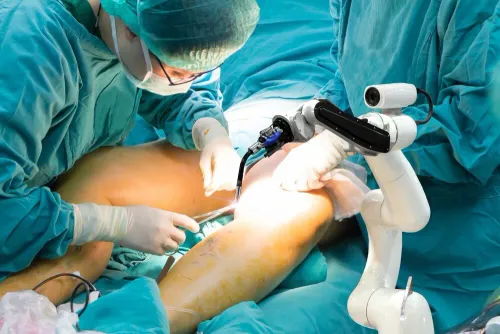
The robot supports pre-operative planning, registration, component positioning, and bone preparation; it does not independently perform the operation. You must be safely positioned, anatomically registerable, medically fit for anaesthesia, and able to receive secure fixation in viable bone.
Severe bone loss, tumour reconstruction, or complex revision surgery may require specialist reconstruction instead of a routine robotic workflow.
When does robotic assistance offer a meaningful advantage?
Robotic assistance offers its clearest advantage when the planned position of the cup and stem, hip centre, offset, and leg length are difficult to reproduce consistently by hand.
In robotic versus conventional hip replacement, many studies show more consistent execution of the plan, but better X-ray alignment does not prove better pain relief, faster recovery, or fewer revisions; long-term comparisons remain limited.
Robotic hip replacement benefits and limitations should be weighed against your anatomy and hospital resources.
| Option | Robotic replacement | Conventional replacement |
|---|---|---|
| Accuracy | Uses a pre-operative plan, registration, and guided preparation | Relies on X-rays, instruments, landmarks, and surgeon judgement |
| Practical burden | CT radiation and robotic planning add scanning, cost, and preparation | Usually avoids a dedicated CT workflow |
| Fallback | Positioning or registration errors can interrupt the plan | No robotic registration is required |
| Evidence | More consistent planned geometry in many studies | Proven, widely available technique with established results |
Ask Dr. Prajyot Jagtap whether your anatomy makes robotic planning useful, whether the hospital has the required system, and how the operation would continue if registration failed or the plan could not be followed. Also ask about surgeon experience in robotic hip surgery and conventional hip replacement.
Robotic assistance is less straightforward when you have:
- Severe bone loss, unusual hardware, a complex revision, or tumour-related reconstruction
- Anatomy that cannot be reliably registered or a medical reason you cannot undergo the required CT
- Positioning, exposure, tracking, or wound-management difficulties related to body habitus
- Bone that cannot provide secure implant fixation
A surgeon who performs both techniques can recommend the safer workable plan rather than treating the robot as the objective.
Related service
Joint Replacement Surgery is a highly successful and life-changing procedure that helps patients regain mobility, comfort, and independence after suffering from severe... View service → |
What should you clarify before agreeing to surgery?
Before agreeing to surgery, ask for a concrete forecast: which pain and activities should improve, which limitations may remain, and how long hip replacement recovery and rehabilitation will take. Confirm the implant design, bearing surfaces, fixation method, expected return to work and activity, and the plan for blood-clot prevention.
Robotic assistance changes planning and bone preparation; it does not remove robotic hip replacement risks or ordinary healing risks.
| Approach | What to clarify | Why it matters |
|---|---|---|
| Robotic primary replacement | Planned component position, implant choice, and what happens if registration fails or standard instruments are needed | The operation must remain safe when the plan cannot be followed |
| Conventional replacement | How the surgeon performs it and how its expected results compare with the robotic plan | Robotic surgery is not automatically better |
| Complex reconstruction | Experience with dysplasia, major deformity, bone loss, or previous hardware | These cases may need specialist reconstruction rather than a routine workflow |
| Long-term result | The risk of implant loosening and revision surgery | No implant lasts indefinitely |
Ask these questions before robotic hip replacement:
- How many robotic and conventional hip replacements do you perform, and what complication and revision rates do you track?
- How will you reduce infection, dislocation, fracture, nerve or blood-vessel injury, leg-length difference, and blood clots?
- Must I stop smoking, improve diabetes control, treat anaemia, lose weight, or receive nutritional support first?
- What restrictions, physiotherapy, walking aids, and milestones will rehabilitation involve?
Suitability is a shared decision based on symptoms, anatomy, health, and a realistic comparison with conventional surgery—not the word “robotic” alone.
Frequently asked questions
Does an abnormal hip X-ray mean I need replacement surgery?
No. Surgery is considered when advanced joint damage causes persistent pain and function-limiting disability despite appropriate non-surgical treatment.
Which personal factors affect suitability for robotic hip replacement?
Your general health, other medical conditions, mobility, treatment history, expectations and ability to follow rehabilitation all affect suitability.
How does a surgeon confirm whether I am a candidate?
The surgeon combines your symptoms, physical examination, medical history, X-rays and treatment response rather than relying on imaging alone.
When can robotic assistance offer a meaningful advantage?
It can support detailed preoperative planning and implant positioning when those tools address a specific surgical challenge or improve the planned procedure.
What should I clarify before agreeing to surgery?
Ask about the diagnosis, alternatives, expected benefits, risks, implant choice, robotic system’s role, recovery plan and the surgeon’s experience.